
Looking to the future, soil and fertilizer nutrient analyzers will continue to evolve towards greater intelligence, integration, and portability.
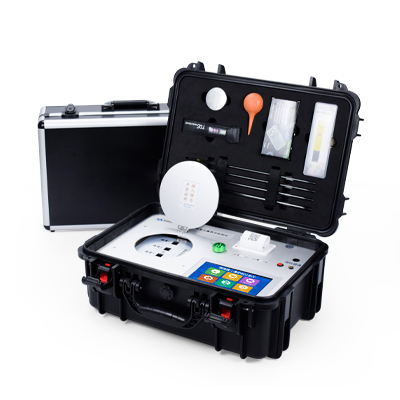
On one hand, deep integration with the Internet of Things and big data cloud platforms will enable real-time uploading, cloud analysis, and long-term tracking of monitoring data, constructing digital soil archives for each plot and supporting macro-level agricultural planning. On the other hand, the equipment itself will become lighter and more robust, potentially incorporating more in-situ non-destructive testing technologies, reducing or even eliminating the need for soil sampling and pretreatment, and enabling real-time field scanning and analysis. Meanwhile, the testing scope will continue to expand, covering a wider range of soil health indicators such as heavy metals and microbial activity. With decreasing sensor costs and optimized artificial intelligence algorithms, this technology will become more widely available to smallholder farmers, ultimately promoting a better balance between food security and ecological security in global agriculture and ushering in a new era of smart agriculture.
During this critical period of transformation in modern agriculture towards precision and efficiency, soil and fertilizer nutrient analyzers have evolved from auxiliary tools into indispensable core technological equipment. These instruments provide direct data for scientific fertilization by rapidly and accurately analyzing the content of nitrogen, phosphorus, potassium, organic matter, pH, and various micronutrients in the soil. Their significance lies in fundamentally changing the traditional extensive fertilization model based on experience and estimation, shifting towards precision management based on soil testing and on-demand supply. This not only directly avoids resource waste, soil compaction, and eutrophication caused by excessive fertilizer use, but also significantly improves fertilizer utilization, reducing agricultural production costs while ensuring crop yield and quality. It is a crucial technological pillar for achieving sustainable agricultural development and protecting arable land quality.