Feedback from the front lines of market promotion reveals a significant shift in fertilizer management: more and more growers are no longer satisfied with traditional methods like "looking at leaf color, relying on experience, and gut feeling," but instead desire a more intuitive, stable, and quantifiable basis for judgment before applying fertilizer. Behind this change lies the pressure of continuously rising costs for labor and fertilizers, as well as the practical need to improve yield, quality, and return on investment. Against this backdrop, the value of chlorophyll analyzers is rapidly being amplified.
In the past, many growers judged whether crops were nutrient-deficient by observing leaf color, plant growth, and overall field performance. While not entirely ineffective, this method is highly subjective. Differences in experience among managers, weather changes, soil variations, and variety differences can all influence the judgment. Leaves "looking yellowish" could indicate nutrient deficiency or a change in physiological stage; slow plant growth could be related to nitrogen supply, water, temperature, pests, or other factors. Relying solely on experience for fertilization can easily lead to over-fertilization, under-fertilization, or delayed application, ultimately affecting yield, quality, and fertilizer utilization efficiency.
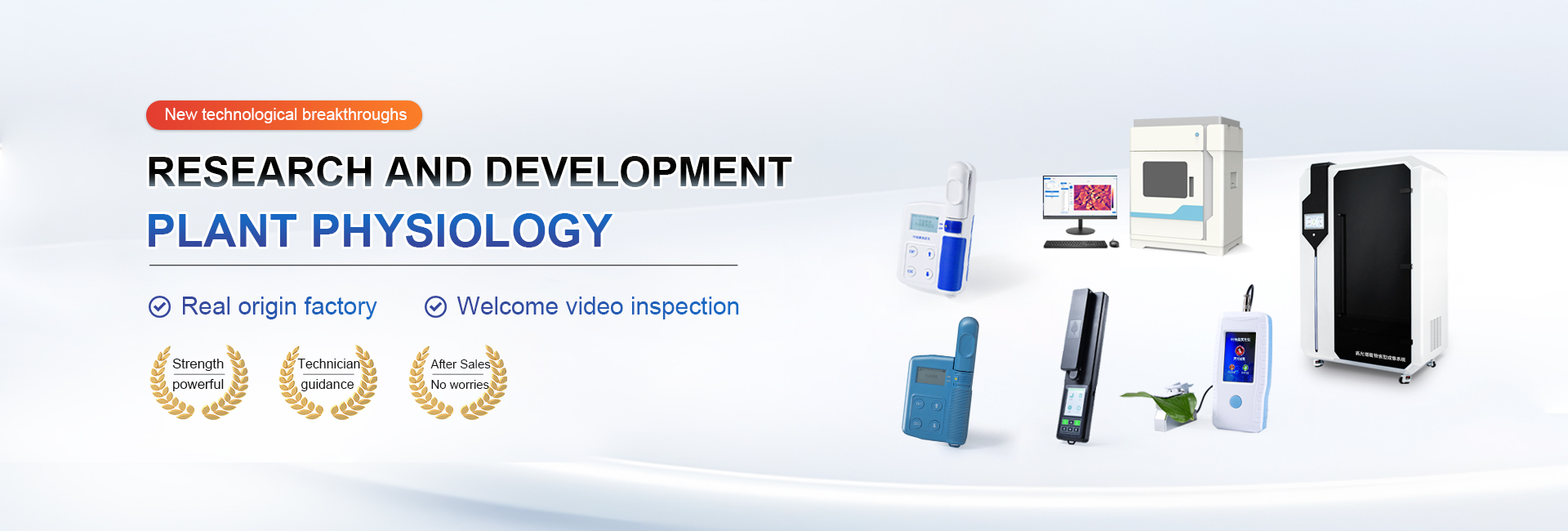
This is precisely why chlorophyll meters are gaining increasing attention. The relative chlorophyll content is strongly correlated with the crop's nitrogen nutrient level, leaf greenness, and growth status. For many agricultural extension workers, planting bases, and research institutions, obtaining leaf chlorophyll data using a chlorophyll meter before fertilization helps determine the plant's current nutritional status, allowing decisions about "whether to fertilize, when to fertilize, and how much to fertilize" to be based on data rather than entirely on experience.
From an application perspective, the key to chlorophyll meters becoming a "preliminary indicator" for precision fertilization lies in their ability to transform the previously ambiguous judgment of leaf color into relatively clear numerical information. Based on the chlorophyll spectral absorption law, chlorophyll meters use two different light-emitting tubes to illuminate the leaves, measuring the light intensity transmitted through the leaves to calculate the relative chlorophyll content or greenness within the leaves. This process requires no complex pretreatment, yields intuitive results, and is particularly suitable for rapid decision-making in the field. For the market, this means the product is not just a testing tool, but a key entry point into the "test before application" management model.
However, from a practical perspective, for pre-implementation indicators to be truly effective, they cannot simply remain at the level of "theoretically feasible"; more importantly, they must be "usable in the field." Agricultural production is not a laboratory environment; field management emphasizes efficiency. A truly valuable chlorophyll analyzer must meet the practical needs of high-frequency inspections, large-area testing, and continuous operation. For example, non-destructive live detection is crucial; during measurement, only the leaf needs to be inserted into the instrument, eliminating the need to remove the leaf and not affecting normal crop growth. This allows for continuous monitoring of crops throughout their growth cycle, resulting in more complete data and clearer trends.
Detection speed also determines whether the product can be used long-term in practical work. For agricultural technicians who need to inspect numerous plots, greenhouses, and demonstration fields, excessively long single measurement times will quickly reduce their enthusiasm for use. If a chlorophyll analyzer can achieve a single measurement interval of less than 0.8 seconds, it means that more samples can be collected in the same amount of time, truly adapting to the pace of batch testing in the field. Especially in the management of various crops such as rice, wheat, corn, fruits and vegetables, and seedlings, rapid and continuous testing capabilities determine whether a chlorophyll analyzer can transition from an "optional device" to a "common tool."
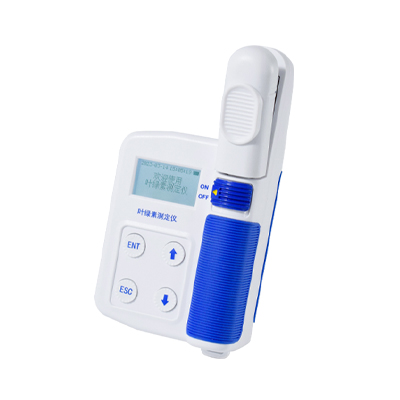
Of course, besides efficiency, the reliability of the data itself directly affects the effectiveness of its adoption. Many users in the market, when choosing a chlorophyll analyzer, are not primarily concerned with the number of functions, but rather with the stability of the data and the consistency of repeated measurements. Only with stable data are fertilization adjustments, field comparisons, and growth analysis meaningful. With an accuracy of ±1.0 SPAD and repeatability of ±0.3 SPAD, this type of chlorophyll analyzer can well meet the basic application needs in agricultural production and scientific research. A measurement range of 0.0-99.99 SPAD and a measurement area of 2mm × 3mm also make it well-suited for different leaf samples.
From a market sales perspective, the ability of a device to continuously create value depends on whether it is both "measurable and usable." Many frontline customers don't lack the results of a single test; what they lack is the ability to accumulate and analyze data over the long term. This is especially true for cooperatives, planting enterprises, agricultural service organizations, and research teams. Continuously monitoring chlorophyll changes in the same crop at different growth stages, in different plots, and under different fertilization schemes is essential to truly develop an experience-based model that can guide management. Therefore, chlorophyll meters equipped with 16GB of storage space, supporting data grouping, viewing, and exporting, while seemingly basic, are actually crucial for users.
Furthermore, the ability to browse and delete abnormal data at any time significantly lowers the barrier to entry for on-site operation. The problem with many past testing devices was that data was "locked" in the machine after testing, making data processing and exporting cumbersome and ultimately resulting in low data retention efficiency. Chlorophyll meters with a multi-functional USB interface can export data and charge the device, and can also connect directly to a computer. Data export requires no additional host computer software, and data can be exported directly via memory card when necessary. This design is more in line with practical usage habits. For users who need to conduct comparative experiments, review agricultural activities, and report to clients, the simpler the data link, the higher the frequency of equipment use.
Another often underestimated factor is the equipment's adaptability to real-world field environments. In our market promotion, we've found that many products look good on paper, but they don't work well in the field. For example, the display screen is difficult to see in strong light, the equipment is too heavy and inconvenient to carry, the battery life is insufficient, and the user interface is complex—all of which directly affect end-user acceptance. Truly valuable chlorophyll analyzers are those that have optimized these details. A weight of 230g is suitable for extended handheld inspections; a high-contrast LCD display ensures clear data reading even in strong light; and a built-in 3000mAh rechargeable lithium battery supports low-power mode and overcharge protection, making it more suitable for continuous outdoor operation.
Furthermore, an adaptable operating and storage environment ranging from -10℃ to 50℃ and relative humidity not exceeding 85% allows the chlorophyll analyzer to cover more regions and seasons. For agricultural production, forestry surveys, plant research, and teaching experiments, such environmental adaptability means the equipment is less susceptible to short-term weather conditions and location limitations. Furthermore, the bilingual (Chinese/English) display and one-button switching design not only benefit local users but also make it suitable for research collaborations, teaching demonstrations, and diverse service scenarios.
From the perspective of evolving market demand, the role of chlorophyll analyzers has evolved beyond simply measuring leaf color; they now play a more proactive decision-making role within precision agriculture. They help growers shift from "treating problems after they appear" to "predicting problems before they manifest." This change in management leads not only to more rational fertilizer input but also to more proactive field management, more systematic data accumulation, and more traceable planting decisions.
Especially in the current context of agriculture increasingly emphasizing standardization, precision, and replicability, the promotion logic for chlorophyll analyzers is very clear: it solves the most common and difficult-to-quantify judgment bias problem in experience-based fertilization; it provides a simple, fast, and non-destructive field testing method; and it accumulates continuous data that can be used for comparison, analysis, and optimization. For the market, such products are more likely to generate stable repeat purchases and long-term service value; for users, chlorophyll meters are becoming a fundamental tool for truly implementing precision fertilization in the fields.
It is foreseeable that the application of chlorophyll meters will become increasingly widespread in planting bases, agricultural extension systems, research institutions, and third-party agricultural service organizations. This is because it represents not just a quick test, but a management approach more aligned with the development direction of modern agriculture: gathering data before fertilization, continuously tracking changes during management, and reviewing results after decision-making. Chlorophyll meters are advancing precision fertilization from experience-based judgment to a quantifiable, traceable, and executable stage, which is the real reason it has become a "preliminary indicator."